Thursday, February 12, 2009

Anterior (cranial) cruciate tears/ruptures


Cranial (anterior) cruciate ligament rupture (in the knee/stifle joint) is the most common orthopedic problem in the dog and is being seen with increasing frequency in the cat. It is also seen commonly in human sport injuries e.g. skiing or football. In pets, the majority of cases (at least 75%) are due to a degenerative condition within the stifle (knee) joint. Some cases of ACL ruptures can be secondary to trauma though. Factors that may contribute include genetics, obesity and aging. Dogs commonly affected include Labradors, Golden Retrievers, Rottweilers, St Bernards, Newfoundlands and Bichon Frise. Up to 40% of dogs will end up tearing the ligament in the other knee also.

Often palpating/feeling the joint (normally under sedation as sore for dog and muscles less tense) can reveal instability, pain, swelling and/or joint thickening. A "click" may also be discovered when bending the knee, which may indicate a concurrent meniscal tear (little cartilage cushions acting as shock absorbers in the joint) which is common in up to 50% of stifles with an ACL rupture.

X-rays may also be useful to help assess the knee. They may reveal osteoarthritic changes (new bony changes), swelling of the joint and the calcification of the broken ends of the ligament.

Pain and lameness may result from the degenerative condition of the ligament itself even before it has ruptured. There may be chronic inflammation long before any instability can be detected in the joint. In the early stages, tears of the ligament may be only partial. Without surgical treatment, it is thought that virtually all of these partial tears will progress to a complete rupture of the ligament. Once the ligament has completely ruptured, the inflammation is more acute and painful and the joint will be unstable. Pain and lameness may also be exacerbated by a meniscal tear.

Surgery will help to both stabilise the knee and allow for surgical exploration of the joint (to remove any damaged menisci).

For reference, there are many different surgical techniques. This suggests in itself that no surgery has convincingly proven superior to others. The most commonly used procedures today include:

Extracapsular technique - where a strong implant (like fishing wire) is used to stabilise the joint (mimicking the position of the torn ligament). Eventually, with time, the implant will fail but by the time this usually happens, enough fibrous tissue has formed and/or sufficient muscle rehabilitation developed to support the joint.

Tibial plateau levelling osteotomy (TPLO), tibial tuberosity advancement (TTA) and equivalent techniques- Complex surgeries whereby the slope of tibial plateau (top of shin bone) is altered to avoid the need of a cruciate ligament anymore. These surgeries are associated with better results and less degenerative joint disease in larger dogs. However, they are more expensive and have higher rates of significant complications.

Animals are often treated according to their size. Any dog or cat is a candidate for surgery but the following guidelines may be used:

Smaller than 7 kg: Conservative treatment (cage rest, pain killers and weight control) commonly return to normal by 4-6 weeks If not, surgery should be considered.

7-20kg: Surgery advisable by any of the techniques mentioned

20kg+: Surgery advisable. Extracapsular technique may produce good result but is prone to failure (and progression of arthritis). TPLO and TTA probably better options.

Painkillers may include non-steroidal anti inflammatory drugs (NSAIDs like aspirin, meloxicam, carprofen) or opiates (like tramadol). Weight control is very important. Other medication may include pentosan polysulphate injections (weekly for 4 weeks) preventing cartilage breakdown and also supplements (like glucosamine and chondroitan sulphate) which help to improve joint fluid and cartilage healing.

Wednesday, February 11, 2009

Should we desex animals??


In response to my thoughts on neutering..... I know that there is a lot of contradictory information out there confusing people. There have been many studies on the benefits and risks of desexing animals. A lot of the studies were done on dogs but can be applied to cats also. I will try and summarize what the studies show:

Advantages of spaying females:
If done before 2.5 years of age, greatly reduces the risk of mammary tumours (the most common malignant tumors in female dogs). It also nearly eliminates the risk of pyometra (uterine infection), which otherwise would affect about 23% of intact female dogs - pyometra kills about 1% of intact female dogs. Minor benefits also include the reduced risk of certain other diseases like uterine, cervical, and ovarian tumours (which aren't common).

Disadvantages of spaying females:
If done before 1 year of age, significantly increases the risk of osteosarcoma (bone cancer). Also there is significantly increased risk of certain diseases like cancers of the heart and spleen, hypothyroidism, obesity, urinary "spay incontinence", recurring urinary tract infections, urinary tract tumours (rare anyway). Also if dogs are desexed before puberty, additional risks include underdeveloped vulva, vaginitis, increase the chance of orthopaedic (bone) disorders and adverse reactions to vaccinations.

Advantages of castrating males:
Eliminates the risk of dying from testicular cancer (rare to die from); reduces the risk of non-cancerous prostate disorders, reduces the risk of perianal fistulas (draining tracts from backside), may possibly reduce the risk of diabetes (data inconclusive).

Disadvantages of castrating males:
If done before 1 year of age, significantly increases the risk of bone and heart cancer, hypothyroidism, progressive geriatric cognitive impairment, obesity, prostate cancer (rare), urinary tract cancers (rare). There is also an increased the risk of orthopedic disorders and chance of having an adverse reaction to a vaccination.

There is also the issue of preventing unwanted litters, marking and roaming behaviour, aggression/sexual behaviour, inconvenience of menstruation etc.

The studies showing these findings are by no means exhaustive and cannot be read so simply. Most of the studies were retrospective, in which they simply looked at dogs with a disease and then worked out what percentage were intact and neutered. There are many variable factors involved in diseases and these all need to be considered (such as diet, obesity etc). For example, the study showing the link to bone cancer was done only on rottweilers. Large breed dogs (like rotties and greyhounds) are more prone to bone cancer whereas it is relatively rare in smaller breeds. So to then say to an owner of a Yorkshire terrier or cat, that desexing increases the risk of bone cancer is not really applicable.

I can personally testify that I have seen many cases of mammary tumours and pyometras/serious uterine infections in entire female dogs and also prostatic diseases and testicular tumours in entire male dogs. These diseases are fairly common and preventing them is definitely worthwhile. The incidence of diseases that may be increased with desexing are relatively rare however. Using the example of heart tumours, the actual figures may be an increase from 3 dogs in every 1000 to 4 dogs in every 1000.

At the moment, my feeling is that the benefits of preventing certain common diseases in older animals by desexing outweighs the possible increased risk of certain uncommon diseases. The current research also seems to show that neutered pets tend to live longer than their intact counterparts (by up to 2 years).

I definitely feel that more research should be done in the whole field of desexing, so that we all will be in a better position to judge and make the right choice for all our pets. I practice what I preach - I spayed my own female dog and then fed her appropriately so she didn't gain weight. (Also another benefit of neutering pets is that it keeps me in a job ).

Hypertrophic cardiomyopathy in cats


Hypertrophic cardiomyopathy is the most common heart disease of the cat. Normally, the left hand side of the heart becomes enlarged and the heart (wall) becomes stiff. This stops the heart from filling up with blood and pumping it around the body efficiently. It can lead to congestive heart failure and systemic thromoemboli (blood clots which can get stuck in the blood vessels around the body causing huge problems). The average age of affected cats is 6 years.

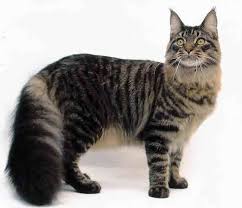
Hypertrophic cardiomyopathy (HCM) is seen in both male and female cats. It tends to be more serious in male cats and also appears at a younger age. Unfortunately, this is a familial/heritable disease (bad genes!) and the cats can look perfectly normal but then suddenly die. Maine Coon, Ragdolls and Norwegian Forest cats appear to be predisposed.

Presently, the main screening test for predisposed cats is echocardiography (ultrasound of the heart). I would recommend it for breeders but probably not for pet owners (as not going to change treatment if no signs).

There is a lot of debate amongst vets concerning whether we should use drugs before the cats show any signs of heart failure. Drugs used include ACE inhibitors, Beta blockers and calcium channel blockers. None of them have been proven to have much benefit in improving the survival time or slowing the progression. In humans, beta blockers are used in HCM to relieve symptoms (especially during stress and exercise) and they may have some use in preventing a disastrous event during extreme stress e.g. cat being chased.

Before the onset of heart failure, I'd probably say give nothing. Some cats can have awful looking hearts and can stay stable for some time and progress slowly. Others though can have relatively normal looking hearts and deteriorate very rapidly. It ends up pretty much relying on the luck of the dice.

Once the cat begins to go into congestive heart failure (CHF) - ECGs (to measure the electrical activity of the heart - heart rhythm), echocardiography (ultrasound), x-rays of the heart and blood pressure measurements may need to be performed. Signs of CHF include coughing, difficult/fast open mouth breathing, weakness, lethargy - drugs like ACE inhibitors and diuretics will need to be used.

Welcome.....hope I can help!

Hello and welcome to my new blog!

I have decided that in response to questions from pet owners about common diseases, I will record my responses here so that others can use it as a reference for future use. I hope that this will be helpful to many pet owners.

The veterinary world is always changing and as one would expect, there are differing opinions amongst veterinarians. This blog is based upon my honest thoughts and opinions on a variety of topics. I will always try to base my advice on the latest research and my own experiences.

You may find that others disagree with me. I always try to promote open and frank discussion so that we may all learn and try to improve the health and well-being of all our animals. I would be most grateful for your opinions/thoughts and encourage any questions, suggestions, feedback and comments.
 
http://vetopinion.blogspot.com/